The Community
Learn the old skills, and actually use them.
A seasonal Almanac every month, one step-by-step challenge at a time, and a table full of people baking, preserving and growing the way it was done for centuries.
- Monthly
- A new Almanac
- 4 courses
- Open on day one
- $9/month
- Cancel anytime
One short step a day, with everyone.
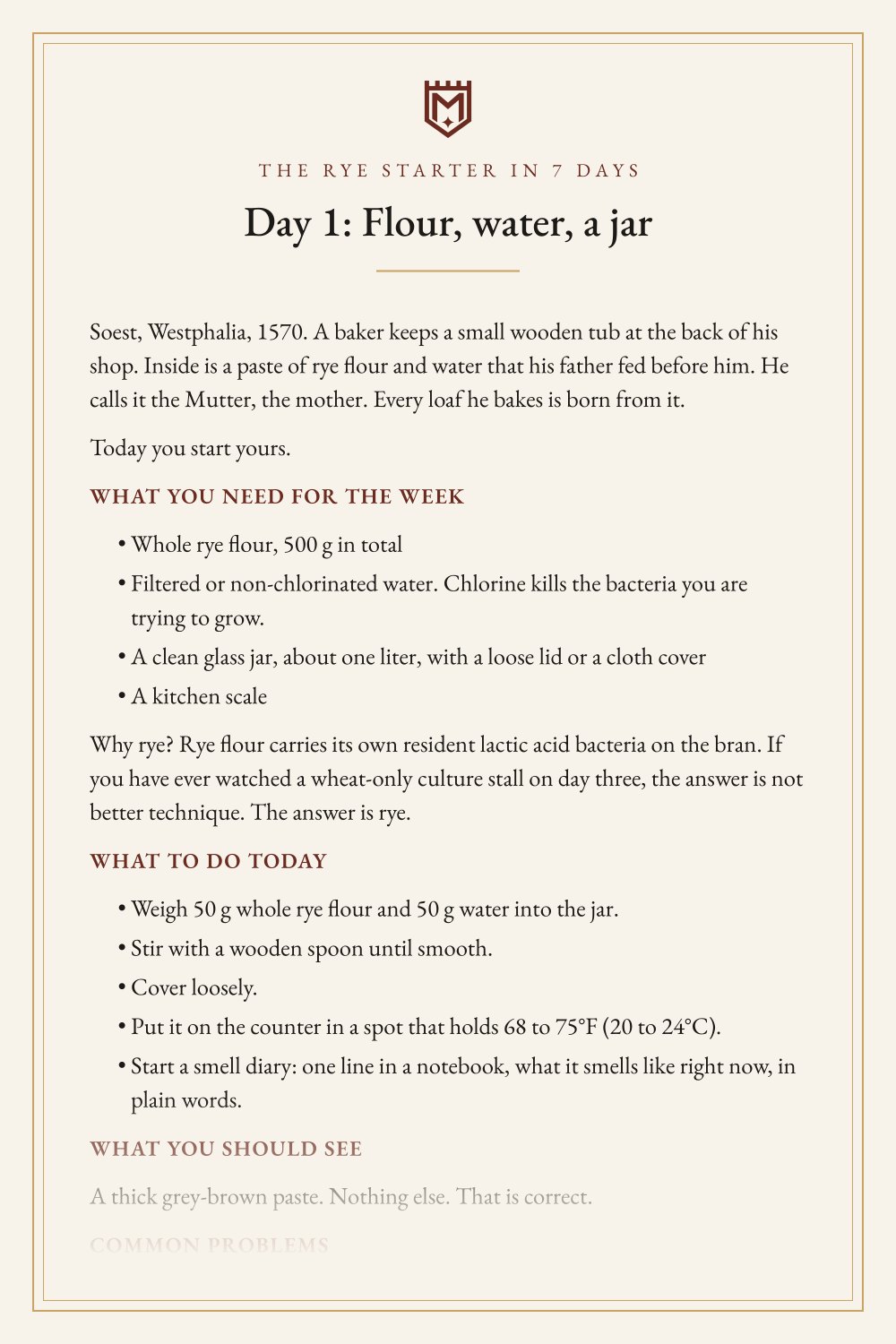
Every challenge lesson follows the same shape, so you always know what today asks of you. This is the first day of the first challenge, exactly as members read it.
What to do today
Weights, temperatures and the order of things, taken from our bakery books. No guessing.
What you should see
So a flat jar on day two is reassuring rather than a reason to give up.
What to post
One photo a day in Show Your Work. Everyone is on the same day, so the answers come quickly.
More lessons from the classroom in the preview below.
The films show you how it was done. Here, you do it.
Four courses, open on day one.
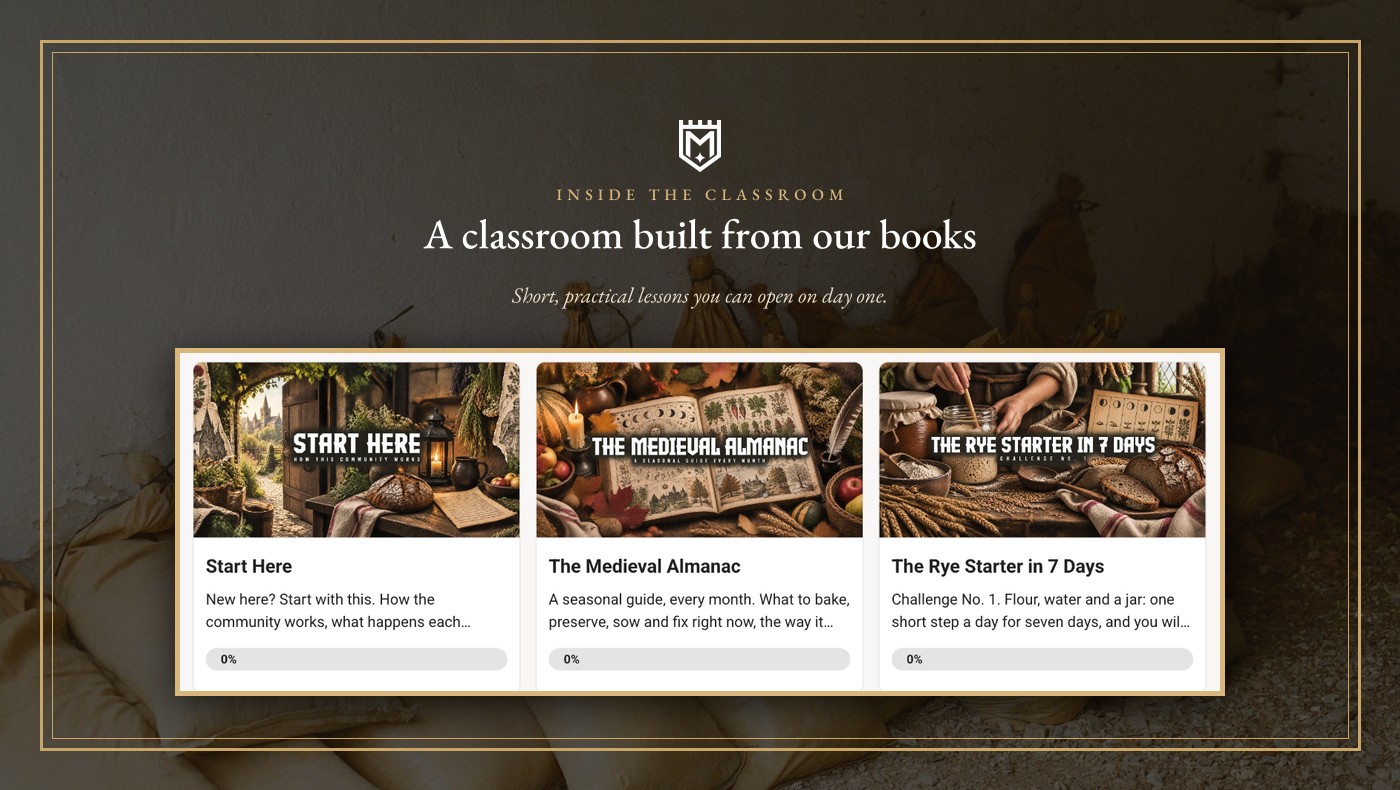
Short, practical lessons drawn from our books on bread, preserving and the garden. Each one ends with a single task for the week.
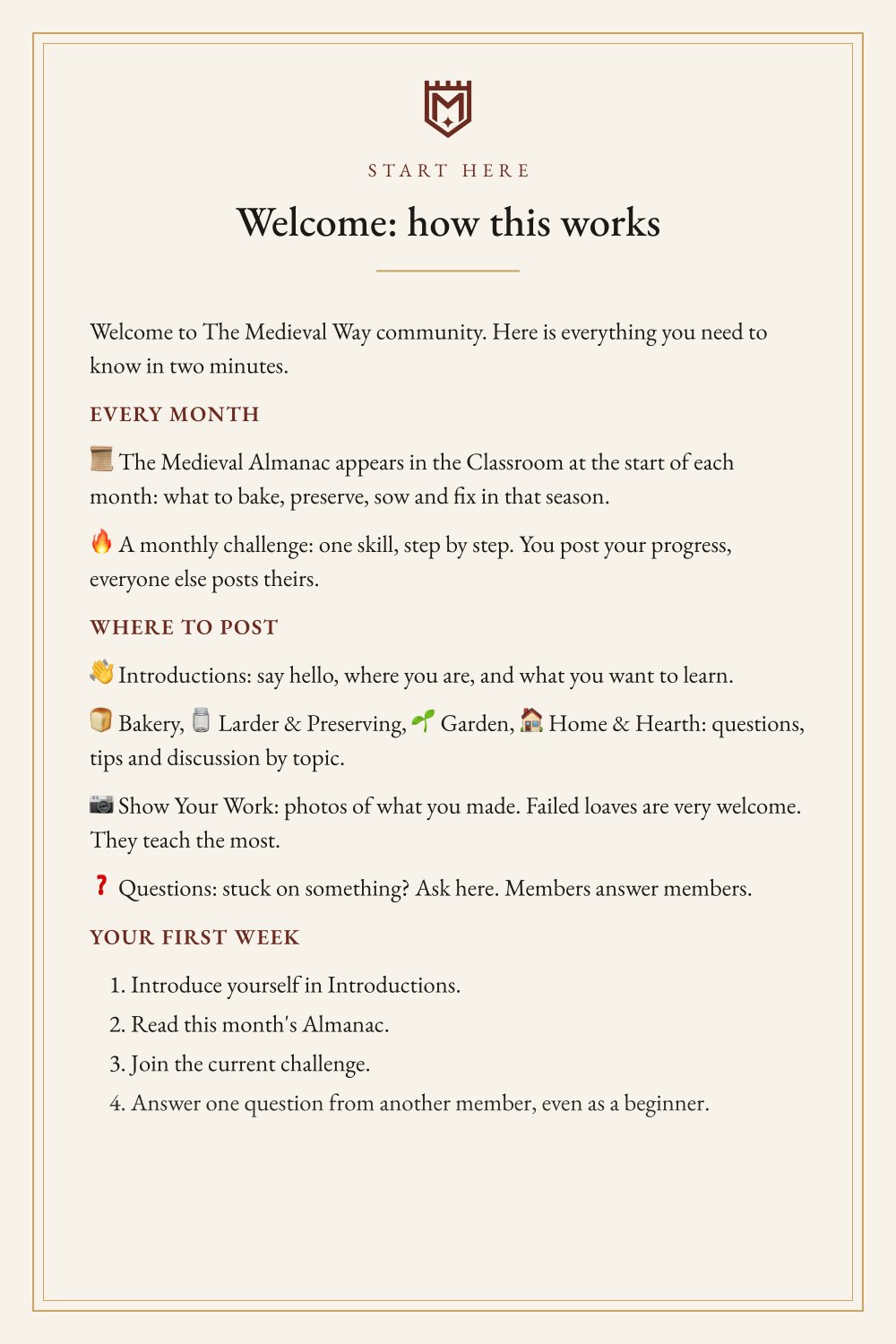
- Start HereHow the community works, in two minutes
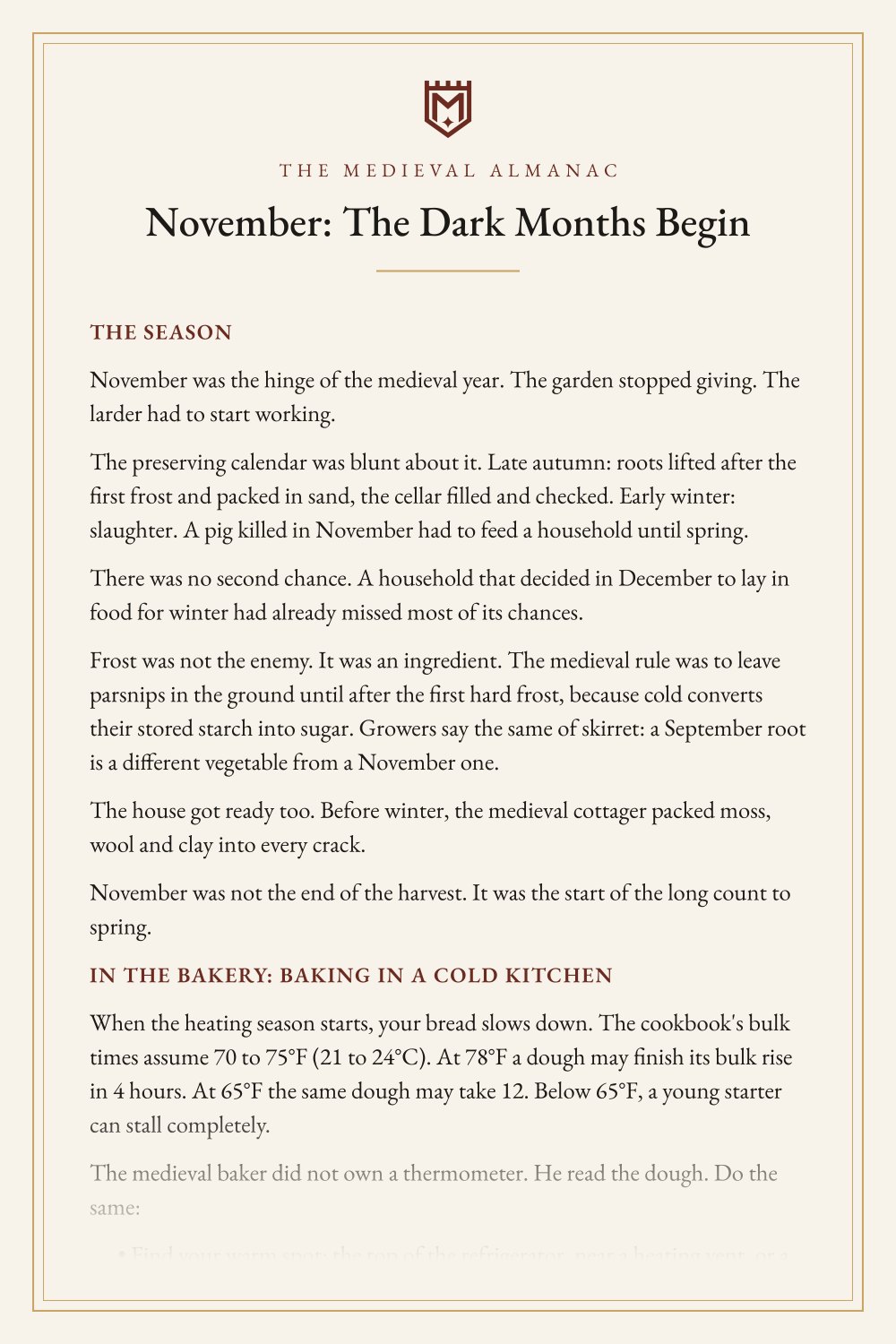
- The Medieval AlmanacA new seasonal guide at the start of every month
- The Rye Starter in 7 DaysChallenge No. 1, from flour and water to a first bake
- Bakery BasicsGrain, starters and the four-grain maslin. Unlocks as you take part
The Rye Starter in 7 Days.
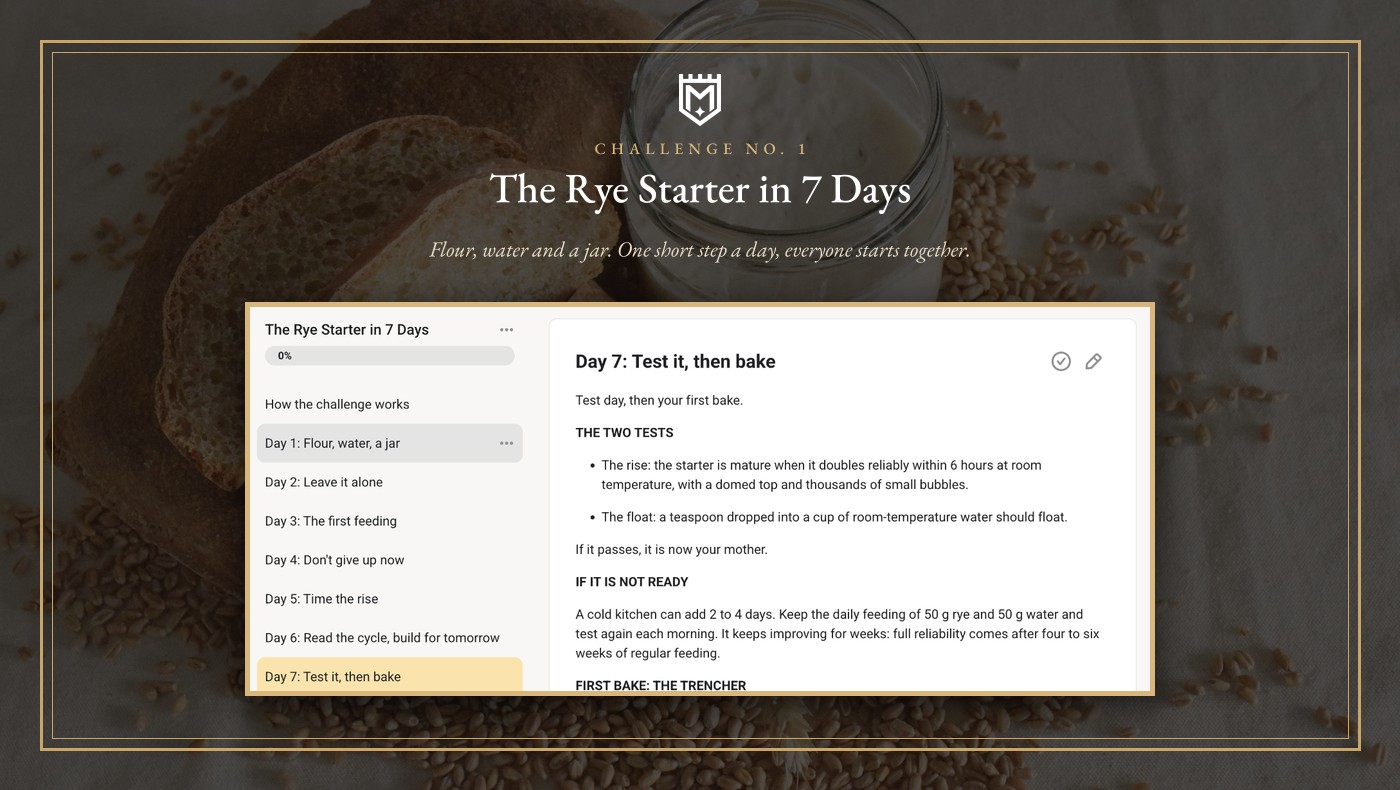
Seven days, one lesson a day. Everyone starts on the same day, posts the same jar, and bakes on day seven.
- Flour, water, a jarWhat you need for the week, and the first mix
- Leave it aloneThe hardest day, because there is nothing to do
- The first feedingDiscard, feed, and the high-water mark on the glass
- Don't give up nowWhy most starters are abandoned here, and the fix
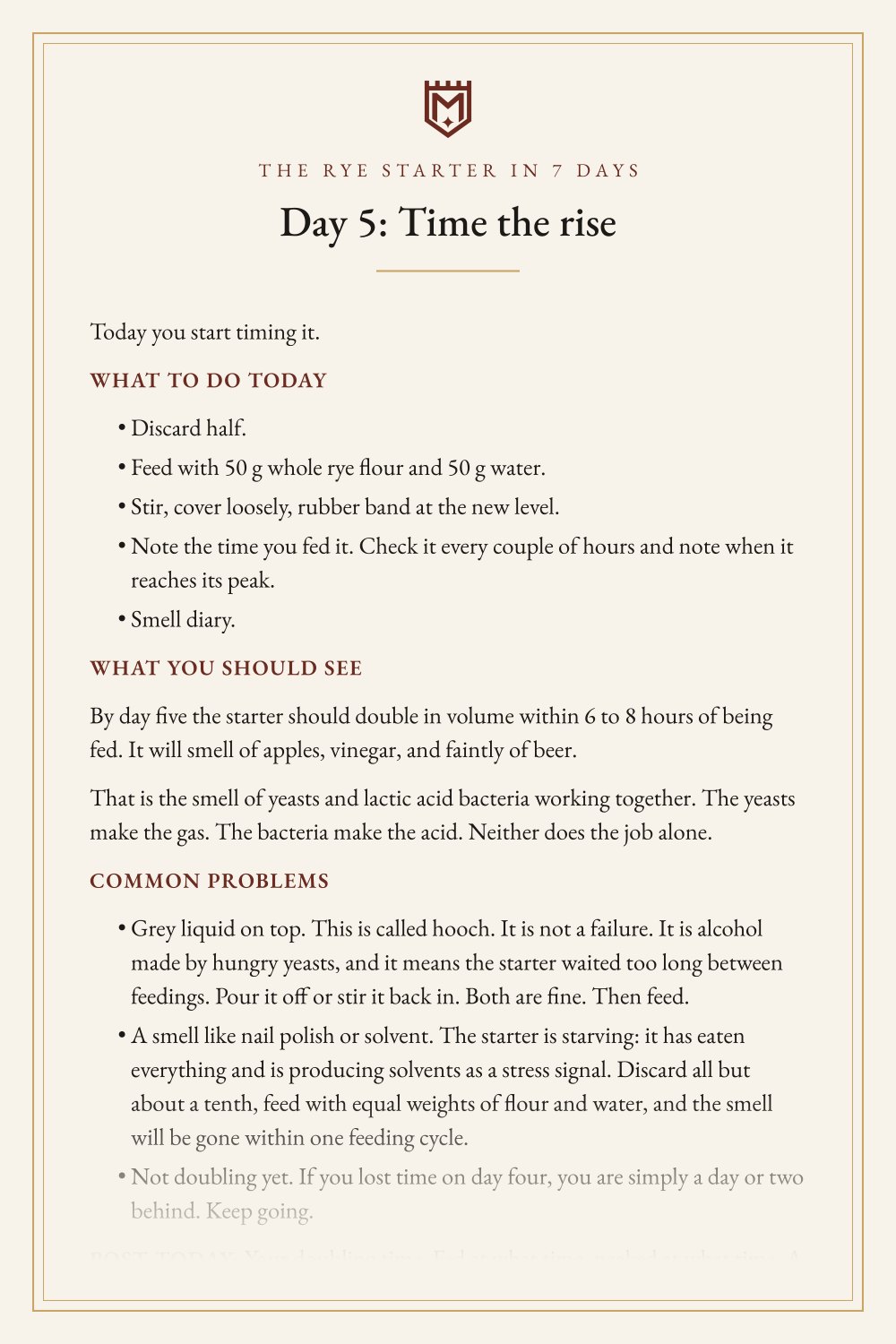
- Time the riseDoubling time, hooch, and the nail-polish smell
- Read the cycleFour smells, four phases, and the evening build
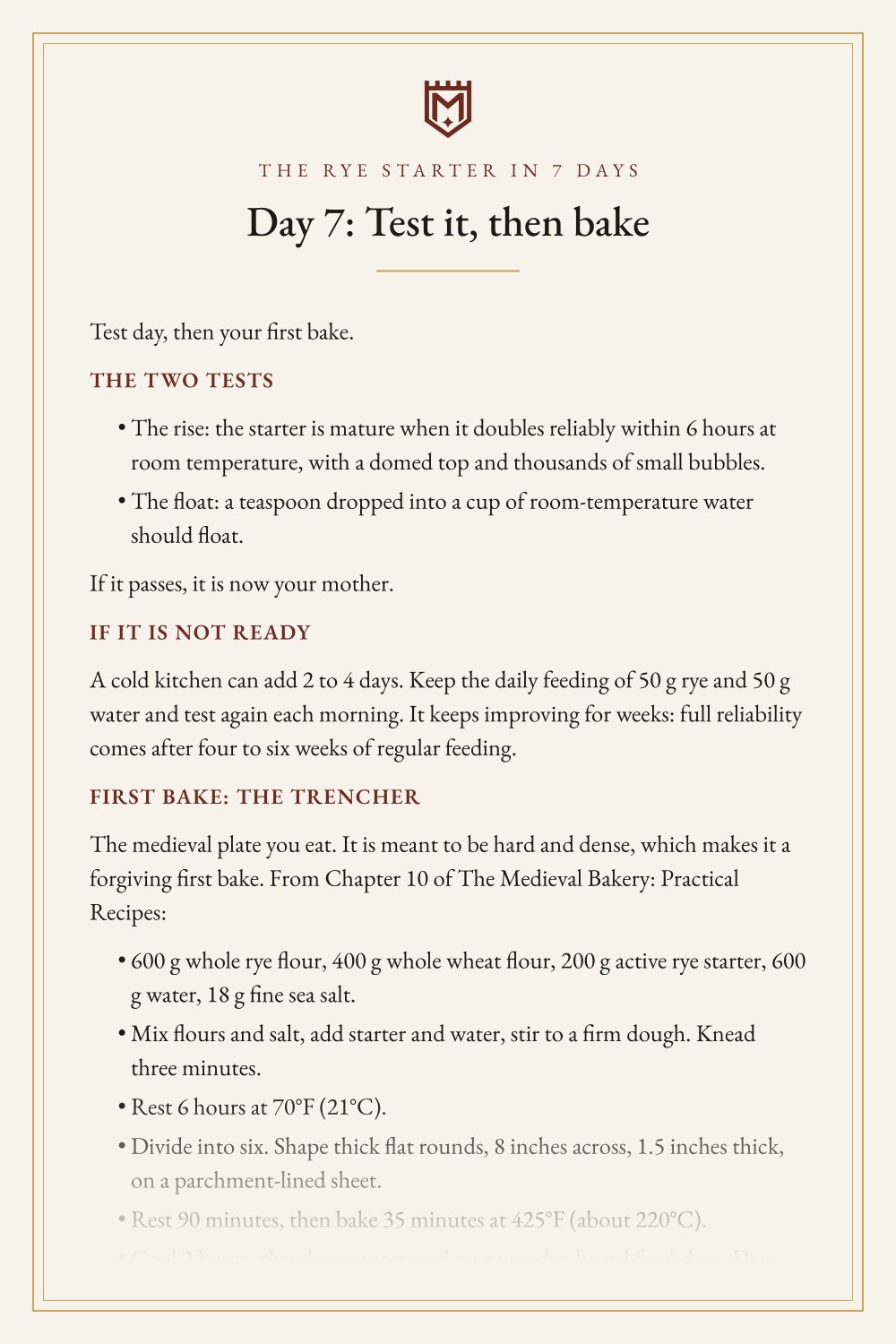
- Test it, then bakeThe two tests, then the trencher: the plate you eat
The Medieval Almanac.
November was the hinge of the medieval year. The garden stopped giving and the larder had to start working. A household that waited until December had already missed most of its chances.
The Almanac follows that calendar. At the start of every month it tells you what to bake, what to put by and what the garden needs now, drawn from our books and their sources.
And it ends with one thing to do this week, not a list of fifty.
Six lessons, as members read them.
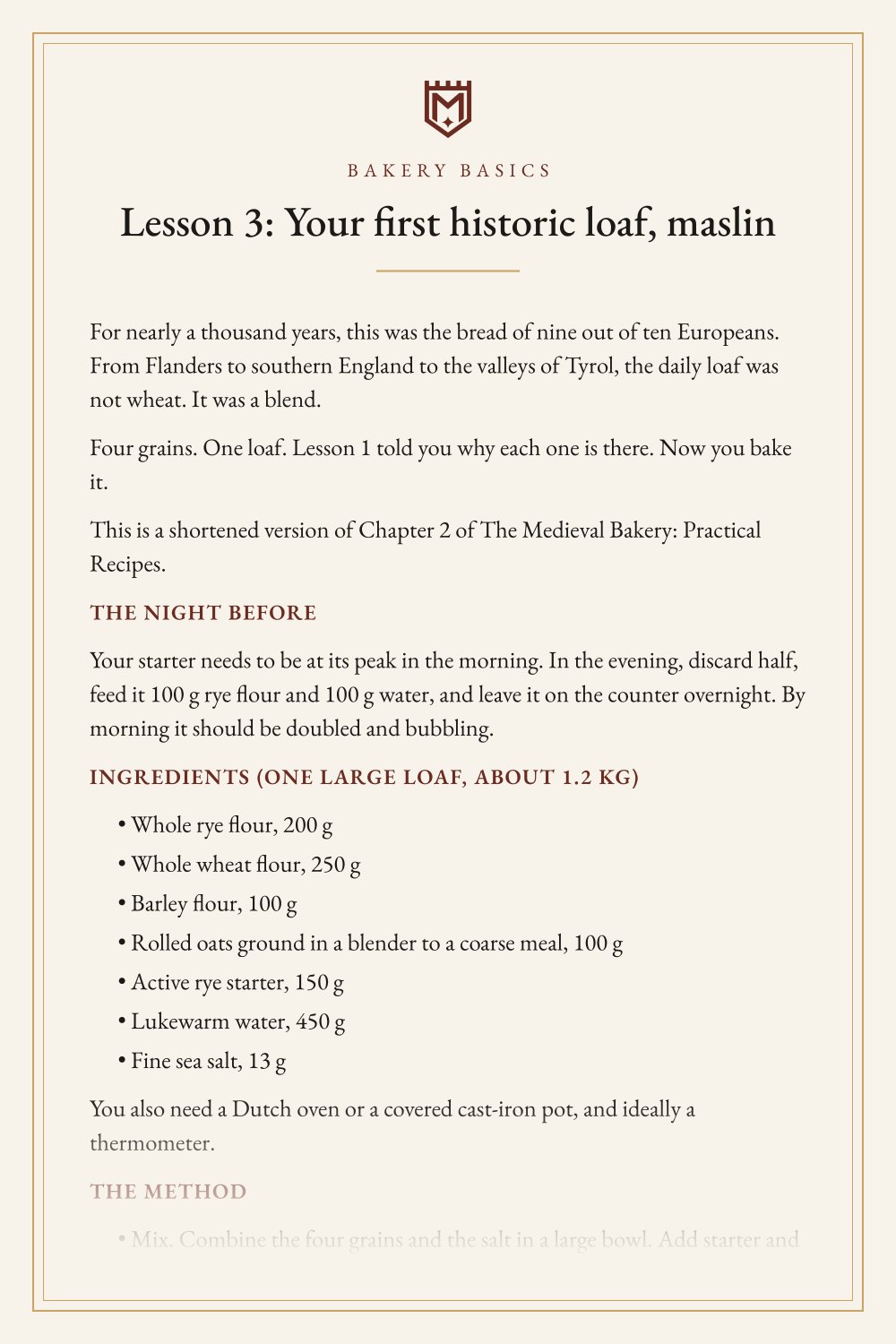
Your first week at the table.
- Open Start Here. Two minutes on how the community works and where to post what.
- Say hello. Where you are, and what you want to learn first. Members answer.
- Read this month's Almanac. Then pick the one task for the week.
- Get a jar and some rye flour. The challenge starts with both, and nothing else.
From the Medieval Way series to your everyday life.
Medieval Way explores traditional skills through its video series and digital field manuals. The lessons bring that work into a format you can return to, at your own pace.
The lessons in the community draw on the same research as the books and the films. Where a method has limits, the lesson says so.
Before you join.
What does it cost?
$9 a month at the founding price, billed by Skool, the platform the community runs on. There is no contract, and you can cancel with one click at any time.
I have never baked bread. Is this for me?
Yes. The first challenge starts from nothing but flour, water and a jar, and the Start Here lesson takes two minutes. Some members have baked rye for years, and they are the ones answering questions.
Do I need to buy the books?
No. The community stands on its own. The lessons draw on the books and say where the full method lives, if you want to go deeper.
Is it just bread?
Bread is where it starts, because that is what most of you asked about. The Almanac covers the larder and the garden every month, and the house and hearth have their own room.
Is the preserving advice safe?
We only teach tested methods from our books, with their warnings, and leave out the ones that carry a botulism risk at home. The rule in every lesson: if something looks or smells wrong, throw it out and ask first.
Where does it happen?
On Skool, in your browser or in the Skool app. It is a private community, so what you post stays among members.
The table is set.
A new Almanac every month, a challenge to start together, and people who know what a sticky rye dough feels like. Billed monthly by Skool, and you can leave whenever you like.
The full methods, in the books.
Every lesson points to the book where the whole method lives. These are them.

Ten medieval loaves with exact weights and temperatures, the rye starter built from nothing but flour and water, and the guide to finding real grain.

How a household ate through winter without a refrigerator. Salting, smoking, drying, fermenting, burying — each method with the science under it, and the safety margins written out rather than glossed over.

Heat, light, water, storage and repair, the way households managed them before the meter. What each method saved then, what it saves now, and which of them still hold up in a modern house.

What grew in a kitchen garden before the seed catalogue — with the sowing numbers, the lookalike tests that work at the rosette stage, and where to actually get the seed.

Medieval Way: The Complete Library
All four shelves in one download — six e-books in total. The bread, the larder, the household accounts, and the garden. Everything Medieval Way has written down, and nothing left to buy later.